


Founder and Global Philanthropy Strategies Director at the Casa Socio-Environmental Fund
This member interview with the Casa Socio-Environmental Fund is one of three in our series covering EGAers' COP30 perspectives.
EGA: Fundo Casa Socioambiental • Casa Socio-Environmental Fund is a Brazil-based grantmaker. How did COP30 in Belém, Brazil, impact your work?
Maria Amália Souza: Having COP30 in Belém put our “backyard” at the center of the global stage. For the Casa Fund, which spent two decades supporting grassroots groups in the Amazon and other key biomes, it was both a huge opportunity and a responsibility.
On one hand, it amplified the voices we’ve always believed should be leading: Indigenous peoples, riverine communities, quilombola (Afro-descendent peoples) communities, women, youth, and grassroots organizations that actually protect the territories. On the other hand, it forced us to translate a very complex climate finance and negotiations universe into something accessible and useful to communities.
COP30 impacted our work in three main ways:
- Scaling access – supporting more grassroots leaders to be physically and politically present in Belém.
- Demystifying climate finance – mapping where the money is, how it flows, and what pathways communities can realistically use.
- Strengthening local infrastructure – showing that community-based funds like Casa Fund are not “projects,” but the missing infrastructure to connect big commitments with real territorial impact.
EGA: Are there any campaigns you want to highlight at COP30 that you were focused on?
Souza: Yes. We’re focused less on “campaigns” in the narrow sense and more on the collective agendas that many of us in the Global South share:
- Climate finance that truly reaches frontline communities – not just in speeches, but in budget lines, modalities, and governance.
- Recognition and resourcing of community philanthropy and socio-environmental funds as strategic infrastructure for climate action in the Global South.
- Protection of defenders and territories – because there is no climate solution while environmental defenders are under threat, as land grabbing, deforestation, and criminal economies are advancing.
Casa Fund has also made a point to produce and share quality information about all aspects of the COPs over the years, but especially this year. For the last five years, we have held a 7-month-long series of webinars open to our grantees and partners. These webinars aim to help them understand their positioning and role in the climate discussions. We have prepared publications with relevant information both for local communities as well as for funders about climate funding, and the most efficient ways to deliver it. For this COP, we prepared a collection of three publications that bring together valuable information for the entire field.
During COP30, we also opened a second call for proposals, in partnership with Brazilian bank CAIXA Economica Federal, to make a total of 400 grants (US$8M) towards community-led sociobiodiversity economies and nature-based solutions. We expect to go from 2000 proposals received in the first round to over 4000 this round, which demonstrates how prepared our society is to implement solutions. However, we only have funds to support 200 projects. This clearly shows how limited the funding is that reaches us, even though our society is ready to contribute to minimizing the impacts of climate change. We hope this will signal funders to step up.
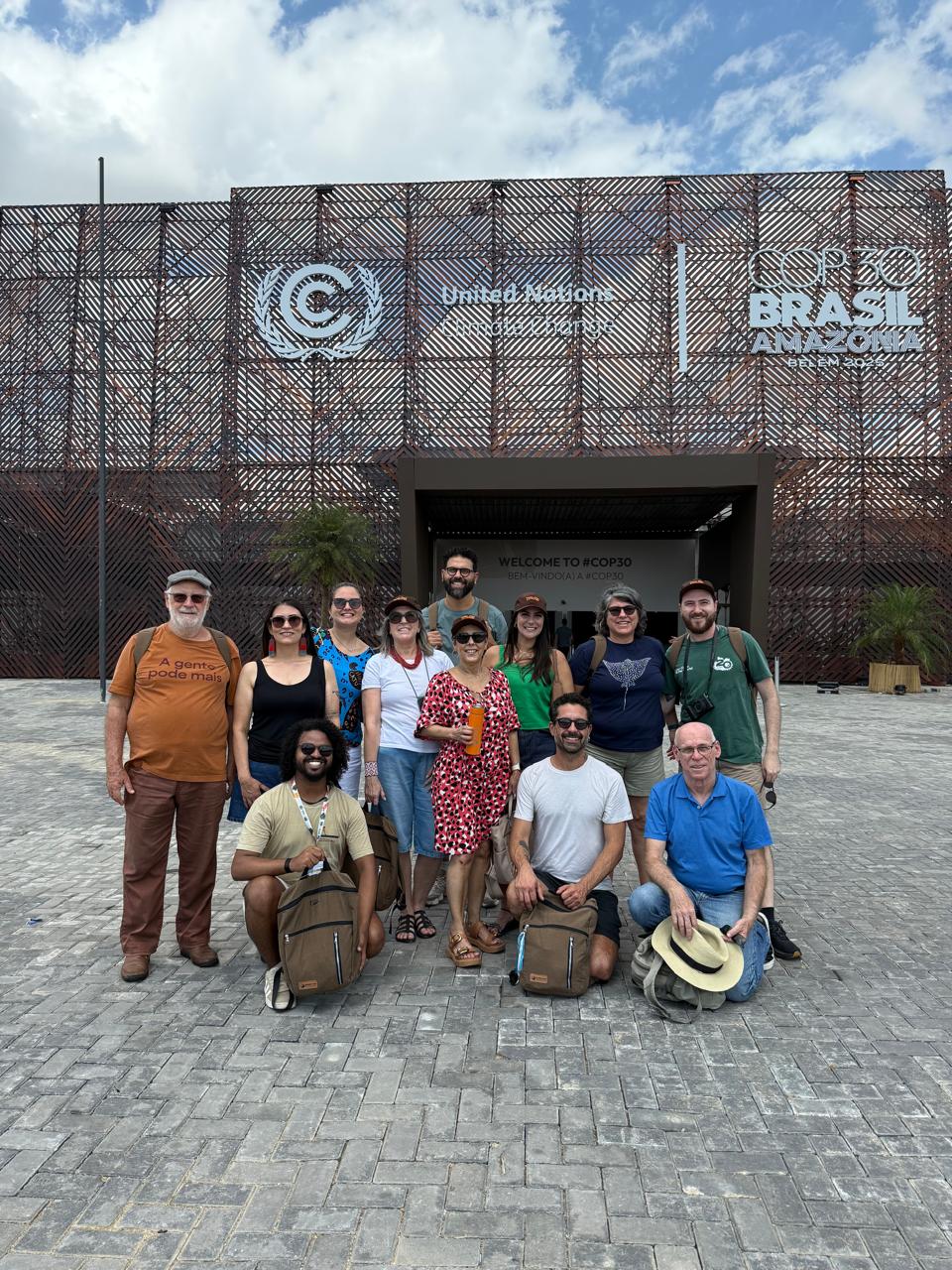
EGA: The Global South House is an initiative by the Alianza Socioambiental Fondos del Sur (Socio-Environmental Funds of the Global South) and the Comuá Network (Brazilian Network of Social Justice Philanthropy), of which you are a co-founder. How did the Global South House facilitate mobilization, collaboration, and conversation among civil society at COP30?
Souza: The Global South House worked as a political and emotional home for many of us. It created a space where Global South actors could speak to each other first, in our own languages and from our own realities, rather than always reacting to agendas defined elsewhere.
It facilitated mobilization and collaboration in a few key ways:
- Convergence space – movements, philanthropic funds, and NGOs from Africa, Asia, Latin America, and the Caribbean had a place to meet, strategize, and build joint messages.
- Cross-constituency dialogue – Indigenous, women, youth, traditional communities, and funders could sit at the same table and discuss not only demands, but concrete mechanisms to move resources and power.
- Narrative shift – it helped re-center the conversation from “victims of climate change” to protagonists of climate solutions in their territories.
- Global South to Global North partnerships - we had a chance to showcase many important aspects of locally led climate work in areas like adaptation, mitigation, and just transition. We demonstrated how broad and cost-effective local work is, in order to support global funders with building a better understanding of possible partnership paths.
For Casa, the Global South House made it easier to build and deepen alliances with other local funds, and promoted conversations with national, bilateral/multilateral funds, and global private donors. All of us brought our movement partners to speak for themselves on what more direct, trusting, and long-term partnerships look like in practice.
EGA: Climate finance continues to be a contentious issue at COPs. How did the conversation play out this year for the different constituencies present?
Souza: Climate finance is contentious because it reveals power: who pays, who decides, and who benefits. At COP30, we saw several layers of this tension:
- Governments discussed commitments, architecture, and instruments, often in very technical language that is inaccessible to most people.
- Big financial and philanthropic actors highlighted billions committed, but with very little clarity on how much reaches the ground and under what conditions.
- Frontline communities and grassroots organizations kept asking the most fundamental question: How do these promises translate into actual resources in our territories, in local currency, in a way that respects our self-determination?
From our perspective, there was growing recognition that current climate finance structures are not working for the people who most need and deserve support. But there is still a gap between recognition and the concrete changes needed—such as simplifying access, trusting local funding infrastructures like ours, and funding long-term territorial strategies instead of short-term projects.
EGA: What opportunities and obstacles are there for ensuring climate finance flows to Brazil and the Global South?
Souza:
Opportunities
- The Global South holds the most critical biomes for climate regulation—Amazon, Congo Basin, and Indonesian tropical forests and savannas—so there is no credible climate pathway without channeling resources here.
- There is a growing ecosystem of local funds, community foundations, and socio-environmental funds in Brazil and across the South that know how to move resources efficiently to grassroots groups.
- Many donors and institutions are increasingly aware that they need new models and this kind of proven infrastructure closer to the ground.
Obstacles
- Concentration of decision-making in the Global North – most large funds and foundations still route resources through institutions based in their own countries.
- Complex, bureaucratic mechanisms – application, compliance, and reporting systems that are impossible for grassroots groups to navigate. That limits the access of local groups to any funding.
- Misunderstandings: What we mean when we say local communities must access direct funding - we are aware that large philanthropic mechanisms from the North are not, and will never be, suited to manage the scale and most appropriate level of funding that local communities can absorb. It is only through local funding structures that this can be done at the necessary scale. So it is this connection that is the most urgent priority right now.
- Mistrust and risk narratives – the perception that funding local organizations is “too risky,” while the real risk is not funding them and failing to protect territories.
The opportunity is to recognize that local philanthropic funds are part of the solution: we already exist, we already have the networks and accountability mechanisms, and we can be trusted to connect climate finance with the people who make climate stability possible.
EGA: You helped start the Alianza Socioambiental Fondos del Sur (Socio-Environmental Funds of the Global South). Can you share more about this network and its goals?
Souza: The Alianza Socioambiental Fondos del Sur • Socio-Environmental Funds of the Global South is a network of socio-environmental and community funds rooted in Latin America, Africa, and Asia. Many of us [funds in the network] were created by social and environmental movements, Indigenous, local communities, and territorial struggles, so we carry that DNA.
Our main goals are:
- To build collective power – so that local funds from the Global South can negotiate with governments and donors from a position of strength, not as isolated actors.
- To co-create standards and practices for trust-based, flexible, and rights-based grantmaking.
- To advocate for direct climate and socio-environmental finance to Global South-led funds, not only to large international organizations.
- To learn from each other – sharing tools, experiences, and strategies that can be adapted across regions.
The Alianza is both a political statement and a practical infrastructure. The Global South is not only asking for resources, but it is also offering models that work.
EGA: How does the Alianza practice impactful grantmaking that is shifting power and resources to grassroots organizations and frontline communities?
Souza: We share a few core principles:
- Trust and proximity – many of our funds have staff and advisors who come from the communities we support. That changes everything: how we listen, how we design calls for proposals, and how we respond in crises.
- Flexible, core, and long-term funding – we try to move beyond project-by-project logic; we fund organizations, leadership, community processes, and territorial strategies.
- Participatory decision-making – we include community representatives, movement leaders, and local experts in our governance and selection processes.
- Support beyond the grant – we provide accompaniment, management, administration, and communication tools, convenings, political support, and connections, not just money.
All of this adds up to a shift in power: decisions about resources are made closer to the territory, by people who deeply understand the context and the risks. That is the essence of decolonizing climate and socio-environmental finance.
EGA: How can foundations operationalize practices that reduce extractive or top-down relationships with Global South partners?
Souza: There are very concrete steps foundations can take:
- Fund through legitimate Global South-built and -led funds that are trusted by movements and communities, and let them design and manage the regranting.
- Trust in the transformative power of scale - To achieve the deep changes that Global South countries need to build more solid democracies, funding needs to reach further and faster into the roots of all levels of social and environmentally just processes. This can only be done from the inside.
- Funnel funding into complementary levels, don’t execute - All the infrastructure that we need to transform our societies and achieve the broad environmental protection we collectively seek already exists; they are just greatly underfunded. There is no need to devise mechanisms elsewhere to bring into our countries in the name of solving our problems for us. All we need is the funding going to the multitude of players that already work together and can build our own solutions from the ground up.
- Provide unrestricted and multi-year support, and stop fragmenting organizations into dozens of small, short-term, heavily restricted grants.
- Share power in governance by including Global South partners in advisory boards, strategy development, and decision-making structures.
- Listen and learn – Start from local analysis and priorities, rather than fitting Global South partners into pre-set frameworks.
- Become our partners - Funders truly interested in helping us protect our biodiversity-rich and climate-regulating biomes can help us mobilize broader access to funding, and join us in building far-reaching and lasting solutions for our territories and for the planet.
Ultimately, foundations need to move from a “project buyer” mindset to a long-term partnership mindset, recognizing that communities and local organizations are not implementers of external agendas; they are co-creators of solutions.
EGA: What are some initiatives and outcomes that resulted from COP30 that you view as meaningful progress?
Souza: Without getting lost in the technical details, I would highlight three types of outcomes that matter most to us:
- Political recognition of local actors, such as a stronger acknowledgment in official texts and political declarations, that Indigenous peoples, traditional communities, and grassroots groups are central to climate solutions and must have direct access to finance.
- Advances in access pathways – Steps, even if small, toward mechanisms that can channel resources more directly to local and regional funds in the Global South.
- Strengthened alliances – New collaborations forged or deepened among funds, movements, and civil society organizations that will outlast COP30 and keep working together in the territories.
For Casa Fund, some of the most meaningful “outcomes” were not just in the negotiation rooms, but in the relationships, strategies, and commitments built among Global South partners during the COP.

EGA: Beyond COP30, what do you see as the most urgent opportunities for collaboration between grantmakers, civil society, and the Global South to advance climate action?
Souza: The urgency is clear: we are running out of time, especially in key biomes like the Amazon. But there are powerful opportunities:
- Building long-term territorial agendas – grantmakers and civil society co-creating ten- to twenty-year strategies for key territories, with stable funding and shared governance.
- Scaling Global South funding infrastructure – strengthening and multiplying socio-environmental and community funds that can hold and distribute climate resources with legitimacy.
- Investing in protection and care for defenders – ensuring security, legal support, and wellbeing for those on the frontlines.
- Connecting climate with rights, gender, and racial justice – moving away from siloed approaches and recognizing the intersectional nature of real solutions.
If grantmakers are willing to share power, listen deeply, and trust Global South-led institutions, we can turn climate finance from an abstract promise into concrete transformations in the territories that regulate the climate for the whole planet.
This member interview is one of three in our series covering EGAer's COP30 perspectives. We invite you to read an op-ed by Global Greengrants Fund and interview with Grassroots International as well.
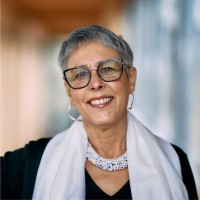
Maria Amália Souza is the Founder and Director of Global Philanthropy Strategies at the Casa Socio-Environmental Fund.
Amália is dedicated to designing systemic strategies to ensure that philanthropic resources reach the most excluded and vulnerable grassroots community groups. She is a founding member of the Comuá Philanthropy Network for Social Justice, the Alianza Socioambiental Fondos del Sur, and leads Casa Fund's participation in various international coalitions of philanthropic funds/foundations. Her 40+ years of professional career include high positions in international NGOs and providing consulting services to companies in their social investment assessments. She serves on the Board of Directors of AIDA - Inter-American Association for Environmental Defense, the Advisory Board of The Ocean Foundation, served for six years in the Steering Committee of the Human Rights Funders Network, and for two years in the Philanthropy Together Braintrust group. Amalia holds a degree in International Service, Development, and Environmental Studies from World College West (California), and completed fellowship programs such as the Donella Meadows Leadership Fellows Program (Sustainability Fellows Network) and Biopsychology from the Vision Future Institute. In 2023, she was honored by the Global Landscapes Forum on International Women’s Day as one of “16 Women Restoring the Earth,” and received the Up With People Founder J. Blanton Belk Award for Outstanding Service to Humanity.